Sunday, 8 May 2011

Fabrizio Mingarelli


Fabrizio Mingarelli
Rome, Italy


What was your first camera and where did you get it from?

My first camera was a creepy Kodak compact camera, my parents bought me for my 14th birthday. I started taking pictures in order to express my feelings with self-portraits. It was a very bad camera, but it was really helpful.


You have been present on a number of online sites and communities: which of these has been or is your favourite? Why?

My favourite is Flickr for sure; there are a lot of inspiring people there. Websites and communities are very important nowadays because they let you know a lot of artists from every country, but I think we have to be careful in using them, because internet and art communities are making us all look equal, without different personalities.


 A lot of artists seem to have a larger artist-contact-group online than in their 'real' everyday life. What's your position on this?

Yes it's true, I know a lot of talented artists online, too, and I think this is a good thing because I can talk and be inspired by an artist from another country in a moment, for example. At the same time, inspiration and influences through other artists are helpful, but they're not so important to me personally, because art has to be personal and instinctive to me.


For pictures: what constitutes the aesthetics of the human body for you?

The human body is beautiful and poetic in every part. I like the harmony and feelings people can express with it. I'm fascinated by faces, hair, legs, hands, movements, skin colours, eyes and more. Amazing things and feelings constitute the human body; we can express happiness, sadness, anger and more with it. This is definitely inspiring to me.


And what draws your attention in photography more: forms or feelings attached to a certain image?

I'm fascinated by feelings for sure. Subjects and light are important elements, but I have seen so many pictures with beautiful subjects and gorgeous lighting detached from any feeling. As I try to catch feelings in my pictures in the first place, I don't mind forms and subjects so much.


There seems to be a very vivid scene of young Italian photographers. Regardless of being part of such a 'scene', what would you say is most 'en vogue' in Italy right now?

If I had to say what is most ‘en vogue’ in Italy right now in photography, I definitely would have to say it’s analogue photography. Analogue media is having a new birth in last years and I’m really happy about it, because from my point of view the digital revolution isn't too positive for photography: I can express feelings that I’m not able to express with my digital camera on analogue rolls. Analogue photography is still the future to me.


How do you plan to implement your engagement in art in your future, professional occupation?

I really hope to become an artist and a real photographer in the future, but now I’m just a wannabe trying to do my best. I'm studying architecture by the way; this is another kind of art I really love. I'm planning to attend some photography classes soon, just to learn more about photography skills but I’m sure that photography is mainly about instincts and inspirations. Nobody can teach you how to take amazing photographs.


Who or what has been inspiring the most lately?

Music and books have been inspiring me since I started taking photographs, but people and light inspire me, too. I like faces, hair, bodies, and expressions; people don't have to be beautiful to be amazing, I like details and I’m inspired by all the gorgeous and different people I can meet walking down the street.


 "Everything is art", would you agree?

Mhmm, no, to me, art is in our eyes, in our feelings and in our minds. Something only can be art if we are able to see art in it.


Burnt red, take a look at his work!


Tuesday, 3 May 2011

Niccolò Barone


Niccolò Barone
b. Carpi, Italy
flickr one two


What do you think is most important for a good cooperation between photographer and model?

I think that the most important things for a good cooperation between photographer and model (and good results) are mutual trust/confindence and professionalism. I believe that a good relationship and a nice approach to shooting allows to achieve better results as it gives more freedom for artistic expression on both sides. In the art of portraiture conveying emotions means to interpret the feelings of who you are shooting, so I prefer to photograph the reality rather than encourage my subjects to pose a according to a certain image. The reality is more interesting than fiction, and true feelings are more exciting.


Would you say that the model is an artist him-/herself as well?

Absolutely. For models, personal talent and the ability to convey emotions through the body, face and eyes, are more important than ‘just’ beauty.
Over the years I have worked with very capable people who managed to express what I was looking for. Neither were they not professional models, nor did they have an exceptional beauty or extraordinary aesthetic qualities, but precisely this allowed me to have good results.


Is there a place you visited solely because you had seen it on TV, in a movie or in a picture?

Yes, a lot of places! The Vinales Valley (Cuba) or Bagan (Burma), Espiritu Santo Isla (Baja California, MX) and some other. Looking at hundreds of photographs every day, my imagination is drawn to the special places that, at times, become destinations for my next trip!


Do you enjoy travelling alone, or do you prefer having company?

I usually travel with other people, I love to share experiences and feelings. I think that sharing emotions, experiences and feelings is one the most important side of any kind of trip.


What is it that you do first in order to get more acquainted with something foreign?

I love walking through towns that I don't know, with a map, and maybe get lost.  It is often a way to get close and go into unknown territories and cultures different from mine. Another strategy I use to go over and to familiarize is to blend in with the locals, through dress and habits, in markets, cafés or other places where I can try to be something of different than myself.


Do you consider yourself more of a cosmopolitan or rather a traveller in different places?

I definitely feel cosmopolitan, but I'd settle to be considered a polite traveller.


Which way do you mostly choose: the simple or difficult one?

The hard way is always the only way in my life. For some years I have regarded this as a curse of my nature, but now I can understand that it is only one way to approach life and the systems that surround us.


Your worst and best memory of taking photographs?

On my way to photograph and design the image is essentially based on research and reproduction of reality, in the aspects that most appeal to me, but always maintaining the highest possible fidelity to realism and life. For this reason, all the moments that bind me to the photo are, more or less rich in emotions.

I do not have a good time related to photography.
I do not have a bad time relating to photography.

I definitely have many moments relating to photography filled with emotions such as love, longing, luck, and joy.


Is patience a virtue?

Yes, definitely. I think that patience is a virtue and a "divine gift", I envy patient people!
Unfortunately, patience is not my natural virtue, but over time and thanks to the people around me, I have learned (and I am learning every day) the importance of this quality and how to administrate it.


The art of bringing colour through expression. Take a look at his work!


Tuesday, 22 March 2011

Beata Wilczek


Beata Wilczek
Wroclaw, Poland


Beata Wilczek is a photographer/stylist living and working in Wrocław, Poland. She describes her work as a form of intimate and dark, fashion-oriented photography, which she often uses as the basis for handmade collages. Many of her projects have been published and exhibited both in her hometown and internationally. Her work as a head women’s wear stylist at the Uniqlo Global Flagship Store in London, UK, became a valuable experience in the fashion industry. After collecting further free-lance experience in Berlin, Germany, Wilczek is currently attending  the Academy of Fine Arts and completing an MA in Psychology, while also working at the leading Polish art gallery Design-BWA Wrocław.


What do you find most peculiar about photography as an art form?

Its simplicity. Still, I often have this feeling that photography is not enough when it comes to my work and that’s why I turn my photos into handmade collages


Do you have a favorite among your own pictures?

I have a few, but I think it’s more about them representing a certain memory. This one was taken in Morocco while I was sitting on a camel. The second one was taken in Houston. I always wonder what's wrong with the shadow and why they would leave such a sad tree like this.


Do you like online street style look books/blogs?

I do. It gives me a lot of inspiration when it comes to styling and fulfills my voyeuristic needs. I think there is plenty of work for sociologists thanks to them. It would be great to read some sort of scientific paper on street style blogs. I also think it is a great phenomenon about individuals, like a case study. I remember having a few walks with Yvan Rodic/Face Hunter, and it was interesting to watch him work.


Do you enjoy purchasing and collecting art for yourself?

I like to collect, especially animals. Plastic, porcelain, wood, you name it. Also I am considering getting Peter's elephantnose fish. It’s a beautiful animal and it would be a good companion for my snails. When it comes to art I prefer to show it, what I do with CN, a small art-curating project. You can find more about it here.


And do you think that collecting art is still a marginal or elite thing to do?

I think it's marginal, and I'm sure to most of the people who do it, it is an elite thing.


What is creativity to you?

It's creating a new, useful quality for something what already exists.


Do you think there is any individual thought or idea at all?

I think there is plenty of it.


What do you do to recover when you feel exhausted from everyday life?

I like to go to the cinema, eat, cook, photograph, make collages, kiss, read, buy new books, plan future travels, walk, talk, listen.


Best advice ever given to you, for any context of life?

It was more of a conclusion after a long workshop with the cinematographer Jacek Petrycki. He said to me that whatever you want to do, just do it now. I was 18 then and instead of buying a camera, I bought myself a ticket to China. I haven't stopped following his advice since then.


Collage and style. Take a look at her work!


Thursday, 3 March 2011

Daniel Dueckminor


Daniel Dueckminor
Munich, Germany


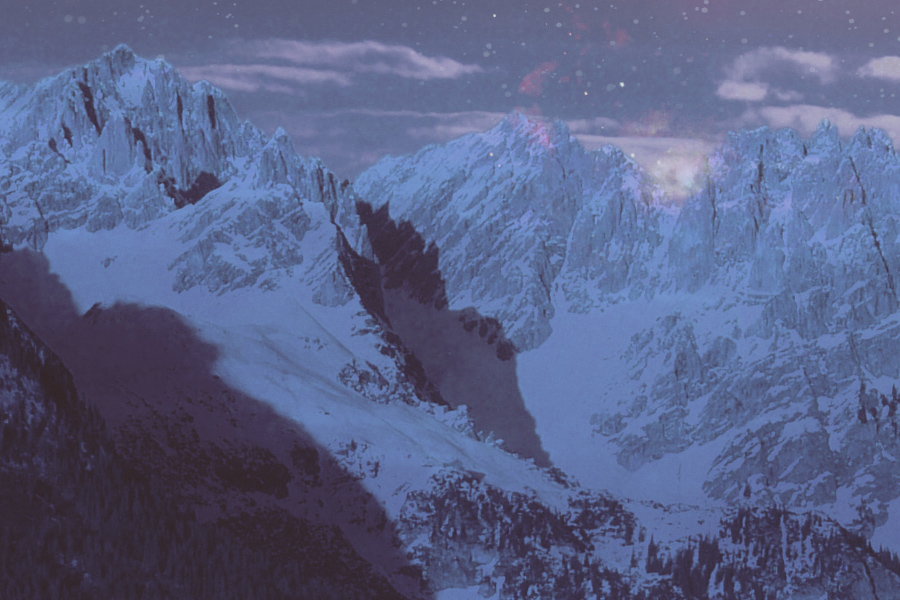
Where were the pictures of your set "Space" taken? How did you get there?

Most of the photos were taken during travels through Europe. I got there by car, plane, boat or train, but since I like it some little adventure here and there, I even climbed or roped down to a spot that looked promising.


Which thoughts are behind the title "Space"?

The title seemed adequate for a feeling that sums up this mysterious language nature offers for communication at certain times. Some places emanate an arcane energy, that can be enhanced or channelled by post processing to even reach a baffling cryptic mood. Space  - in terms of the universe - for me is representative for the search of people trying to disclose nature’s yet unsolved secrets.


As many artists, you divide your photographic work into analogue and digital sets. Despite the technique, what do you think are the biggest differences between these two?

Maybe, the emphasis lies on everything that happens before you push the release in analogue photography, whereas in digital photography the emphasis lies on everything that happens after you push the release.
With analogue photography the most interesting challenge for me is to rely on what I see and how I see it. Taking a picture in the right situation and time and is the fun part. The challenge is the actual picture you take, and not what you make out of it afterwards.


You live and study in Germany; are there any places and cities that have a vivid art scene, but are (yet) unknown internationally?

I was lucky to present my work in Düsseldorf a few weeks ago and it definitely offers a vibrant art and music scene.  No wonder that some of the most important ‘kraut’ rock bands emerged from this city. I think that Dresden and Leipzig have great potential, too.


And how is life in Munich? Would you exchange for any other city?

I can only advise everyone to experience Munich in summer. Whilst it is a pretty conservative city during the rest of the year, it somehow transforms into a paradise of relaxation in summer in which it is considered eminently respectable to drink gallons of beer an lie around in the parks. I'd exchange for London and Brisbane, though.


Back to your photographic work, wherein dreaminess, dust, fog, and mystery seem to be reoccurring themes. What inspired you to following these motifs?

To me, dreaminess, dust, fog and mystery are just like an ever-continuing journey into the unknown secrets of nature. There's no end in sight and that's a great motivation to keep on exploring this theme.


Area studies. Take a look at his work!